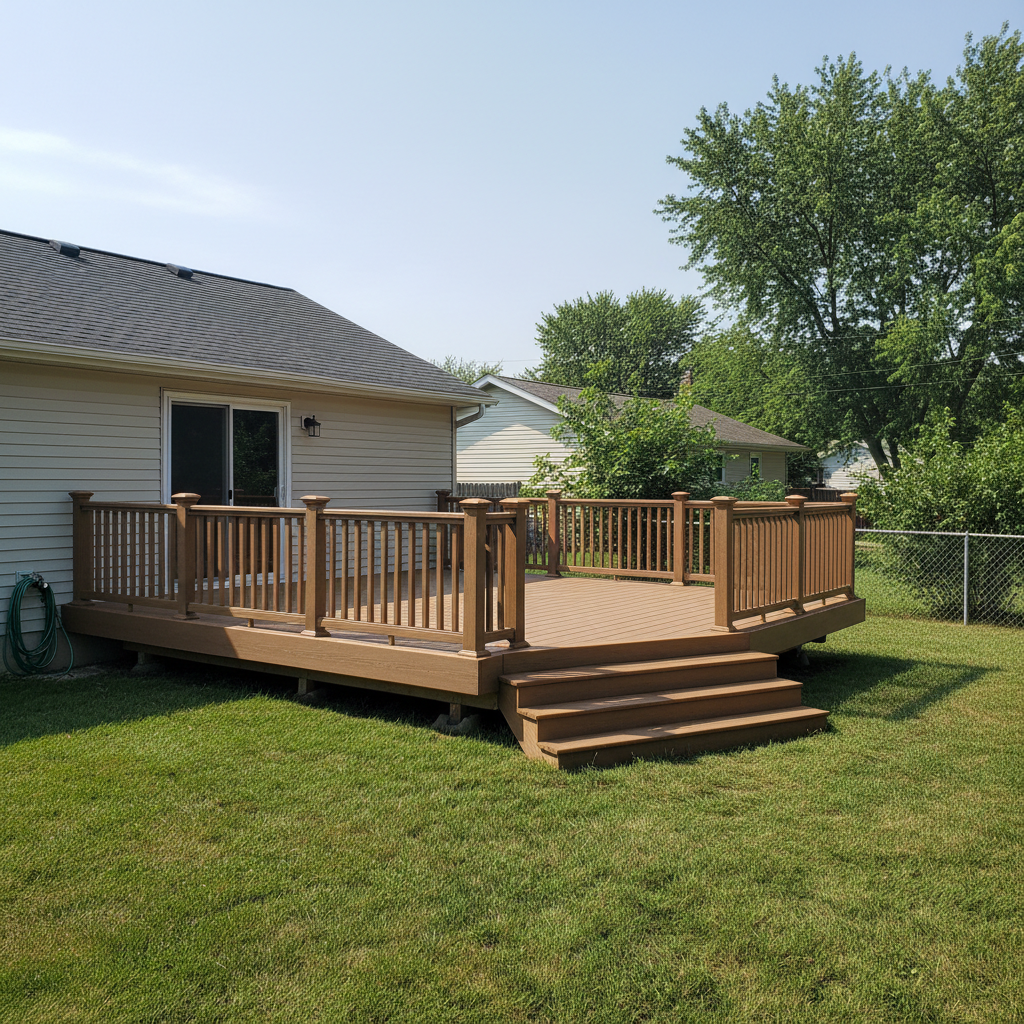
Most people shopping for a deck builder end up comparing three bids that all say roughly the same thing: quality materials, years of experience, free estimate. That doesn't tell you much. What actually separates a good builder from one you'll be calling back in two years is how they handle the stuff you can't see once the boards are down, the footings, the ledger attachment, the fasteners, and whether they even bother pulling a permit.
Start with the permit, not the price
In Bolingbrook, any deck attached to the house, and most freestanding ones over a certain size, needs a building permit through the village. That permit process usually involves a plot plan showing setbacks from the property line, and an inspection of the footings before you pour concrete, a framing inspection before the decking goes on, and a final once railings are up. A builder who tells you permits are a waste of time or money is telling you they don't want an inspector looking at their footings. That should worry you more than it apparently worries them.
If your house is in one of Bolingbrook's subdivisions with a homeowners association, which is most of them, check whether the HOA needs to approve the design before the village will even look at your permit application. Skipping that step is how people end up tearing out a deck they just paid for.
Ask how deep the footings go, and why
Will County frost depth is generally figured at 42 inches. That means footings for an attached deck need to go down below that line, or the ground will heave them in the winter and settle them again every spring, year after year, until your deck starts pulling away from the house. This area sits on heavy clay till left behind by glaciers, and clay is worse than sand or loam for this exact problem. It holds water, it swells when it freezes, and it moves more than builders in drier climates ever have to think about.
A builder who can tell you their footing depth without checking a chart has poured a lot of footings here. One who shrugs and says "we usually just go down a couple feet" either doesn't know the local frost line or isn't planning to follow it.
The ledger board is where decks actually fail
Ask any deck builder with real field time what the most common failure point is on an older deck, and almost all of them will say the same thing: the ledger board, the piece bolted to the house that the whole structure hangs off of. It needs proper flashing to keep water from running behind it and rotting the house's rim joist, and it needs lag screws or through-bolts spaced correctly, not nails. Decks have come down, with people on them, because a ledger was nailed instead of bolted and never flashed. If a builder glosses over this part of the conversation, that's worth noticing.
Joist spacing matters too. Sixteen inches on center is standard for most decking materials, but composite boards sometimes call for tighter spacing, down to 12 inches, especially if the boards will run at an angle. A builder quoting composite decking without adjusting joist spacing for it is either cutting a corner or hasn't read the manufacturer's install guide, which most composite warranties actually require you to follow.
What the seasons here do to a deck
Chicago-area winters put a deck through dozens of freeze-thaw cycles a year, not just one long cold snap. Water gets into any gap in a board or any unsealed cut end, freezes, expands, and widens that gap a little more each time. That's why end-cuts on treated lumber should get sealed before assembly, not after, and why a stain or sealant job on a wood deck here is really maintenance, not decoration, best done every one to three years depending on sun exposure and traffic. Composite decking sidesteps a lot of that, but it still expands and contracts with heat, so gapping between boards has to account for a hot, humid July day versus a January morning, not just how the deck looks on installation day.
Spring in this area tends to bring heavy rain over a short stretch, and a lot of Bolingbrook lots don't have aggressive grading, so water pools more than people expect. A deck built low to the ground without any thought to drainage underneath can end up sitting over standing water for days after a storm. Ask where the water is supposed to go once the deck is built. If the answer is "it'll be fine," push harder.
Red flags worth walking away from
- No mention of a permit, or a claim that the job is "too small" to need one. Village rules don't usually care about square footage as much as whether the structure is attached and how high it sits off grade.
- A quote with no breakdown between materials and labor. You want to know if you're paying for pressure-treated pine or composite boards, because the price difference per square foot is significant and should show up in writing.
- Reluctance to put the footing depth, fastener type, or joist spacing in the written contract. Verbal promises about what's under the decking don't help you later.
- No insurance certificate offered without you asking twice. A deck involves ladders, power tools, and often digging near a gas line or buried cable, and accidents happen on jobs that look simple.
- A rock-bottom price with a start date next week. Builders who are good get booked out, especially in spring when everyone in the area wants a deck finished before summer.
Older streets versus newer subdivisions
A lot of Bolingbrook's housing went up from the late 1970s through the 2000s, so the age of the neighborhood changes what a builder runs into. On older streets, there's a decent chance of finding an undocumented addition, an old concrete pad, or utility lines that were buried before anyone kept good records. On newer subdivision lots, the ground has usually been more recently graded and compacted, which can actually make it easier to dig consistent footings, but HOA design rules tend to be stricter about railing style, decking color, and how close you can build to a fence line.
A builder who's worked both kinds of lots around here should be able to tell you, before digging starts, what they expect to find and how they'll handle a surprise if it turns up.
None of this is complicated once you know what to ask. A decent builder will want to talk about footing depth, flashing, and permits before they talk about stain color, because that's the part that decides whether the deck is still standing straight in ten years. If you want to see how we handle those details on our own jobs, Premier Deck Solutions is a good place to start comparing notes against.